
Using genomics to guide the clinical management of rare and diagnostically challenging cancers.
Rare and less common cancers present significant challenges for diagnosis and treatment, and have lower survival rates than other cancer types. Comprehensive genomic testing is improving the outlook for these patients, with the potential to help resolve diagnostic ambiguity and guide precision treatments for meaningful clinical impact.
Led by Associate Professor Richard Tothill, the Rare Disease Oncogenomics (RADIO) Lab leads national and international studies to develop and implement new translational and clinical genomics methods for patients with these incurable rare cancers. By analysing cancer genomes, the team is discovering new biology of these cancers while also developing and applying DNA technology to help resolve the likely primary origin of a tumour and inform personalised treatment.
Patients are spared the anguish of prolonged diagnostic uncertainty and site-specific and targeted therapies can be given to improve survival outcomes.
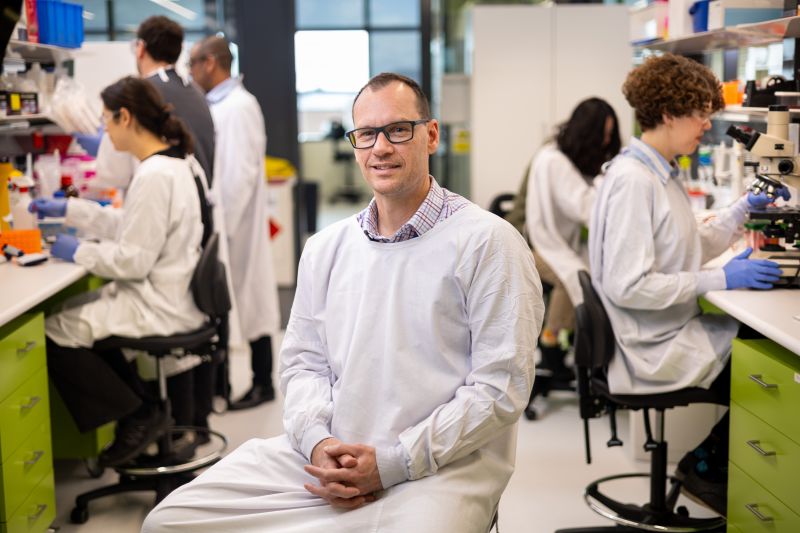
The lab’s focus on diagnostically challenging cancers with limited treatment options includes cancer of unknown primary (CUP) and neuroendocrine neoplasms (NEN). They have vital partnerships with teams at Peter MacCallum Cancer Centre, enabling their research and ensuring clinical translation.
Research Projects
-
Cancer of unknown primary (CUP) is defined by the inability to diagnose the site of origin of a metastatic cancer after conventional clinical investigations. CUP patients have one of the worst survival outcomes of all cancers. Genomics can be helpful to resolve the site of origin of these cancers by identifying genomic features that are indicative of a specific cancer type, such as breast, lung or biliary tree. Genomics can also inform precision treatments such as small molecule inhibitors or immunotherapy which may improve survival outcomes for these patients who would otherwise receive non-directed chemotherapy.
-
SUPER-NEXT is a prospective national study incorporating real-time clinical whole-genome sequencing into the diagnostic work-up of patients with CUP. SUPER-NEXT utilises state-of-the-art genomic approaches to help resolve tissue of origin of CUP and identify potential targeted treatment approaches. The study is run in collaboration with Professor Linda Mileshkin at the Peter MacCallum Cancer Centre.
SUPER-NEXT is investigating the impact of clinical genomics for CUP patients measured by a) improvement in the certainty of a pathological diagnosis for site of origin, b) changes in treatment decisions by oncologists c) improvement in patient survival, d) patient reported outcome measures and e) health economics (Prof Louisa Collins, Viertel Cancer Research Centre at Cancer Council, QLD). SUPER-NEXT is also building a biobank of patient samples with comprehensive clinical annotation for future research.
SUPER-NEXT is also informing the use of clinical genomics in another CUP study called CUPID, led by Prof Chris Karapetis at Flinders Centre for Innovation in Cancer in Adelaide, South Australia.
-
FAPI-CUP is an MRFF-funded clinical trial led by Prof Linda Mileshkin at the Peter Mac testing the role of a new PET radiopharmaceutical agent called FAPI to help resolve CUP primary cancer diagnosis compared to conventional FDG-PET. FAPI also has therapeutic potential to deliver targeted radiation therapy to a tumour by attaching a particle emitting radioactive element to the FAPI compound.
The RADIO lab is investigating the additive value of clinical whole-genome and transcriptome sequencing of CUP patients with results from FAPI and FDG-PET scans. This will also identify potential genomic biomarkers of FAPI radiopharmaceutical treatment response.

Developing of a liquid biopsy test for CUP
The RADIO Lab is partnering with Professor Sarah-Jane Dawson and clinicians and researchers at the Peter MacCallum Cancer Centre to develop a rapid liquid biopsy blood test to resolve the diagnostic dilemma of the tissue of origin of a cancer of unknown primary. The liquid biopsy test utilises whole genome sequencing to detect small amounts of cancer-specific DNA released from tumour cells into the bloodstream, and will speed up the time to primary cancer diagnosis and improve patient access to precision therapies.
This research has received funding as an Innovation Project of The Advanced Genomics Collaboration (TAGC) — a partnership between Illumina and The University of Melbourne to enable fast and affordable research, analysis, trials, commercialisation and application of genomics-based healthcare innovation at both global quality and scale.
-
Phaeochromocytoma (PC) and paraganglioma (PG) are rare neuroendocrine tumours that develop from the adrenal glands and autonomic nerve junctions, respectively, are heritable – have the potential to run in families – in 40%. PCPG have the potential to synthesise and release catecholamines (e.g. adrenaline, noradrenaline, dopamine) into blood circulation, which can cause severe high blood pressure and life-threatening heart damage. Although many PCPG have an indolent disease course, some can be clinically aggressive and once they have spread (metastasised) to a distant site in the body they are incurable and hard to treat. There are currently insufficient clinical biomarkers to predict whether a patient’s PCPG cancer is likely to metastasise.
-
The A5 SDHB study was a collaborative multi-national study including the National Institute of Health (NIH) and Kolling Institute in Sydney as well as nine other sites in six countries. The study used advanced genomic methods to identify changes in the genes of tumour cells that regulate PCPG behaviour, to understand what initiates the process of metastasis and identify new therapeutic targets for precision treatments.
The international collaboration, led by A/Prof Richard Tothill, was the largest study of its kind on these rare adrenal cancers, combining genomics and multi-omic profiling to uncover features linked to metastatic disease progression and treatment response.
The study focused on hereditary SDHB-mutant PC and PG, which have a higher likelihood to metastasise, yet this does not occur in all patients. By performing multi-omic analysis of 94 tumours from 79 patients using seven molecular profiling techniques including single-cell genomics, the study confirmed that metastatic SDHB-mutant PCPG tumours are genomically distinct from those that do not spread. The A5 study also showed that PCPG have different molecular profiles based on where they arose from in the body. The A5 study received funding from NHMRC and three foundations: Pheo Para Alliance (USA), SDHB Coalition (USA) and Paradiffference (Sweden).
-
Diagnosis of PCPG relies on clinical suspicion and accurate diagnostic methods. In patients suspected to have PCPG standard testing has high false positive rates and lacks negative predictive value resulting in protracted diagnostic journeys. Indeed, the mainstay of PPGL diagnosis is detection of elevated catecholamines yet this is uninformative in the 15% of patients with non-secretory tumours. The RADIO Lab, in collaboration with the Peter Mac NET Unit, an ENETS Centre of Excellence, is undertaking analysis of circulating tumour DNA (ctDNA) in blood plasma to assess feasibility of liquid biopsy in patients with PCPG for diagnosis and precision treatment decision-making. Levels of ctDNA are also being compared to PET imaging to benchmark liquid biopsy results to contemporary cancer imaging.
-
Merkel cell carcinoma (MCC) is an aggressive form of skin cancer, caused by either viral infection or UV-sunlight, with a five-year survival of only 50 percent. Australia has the highest incidence of MCC worldwide attributed to high sun-exposure.
-
Pancreatic Neuroendocrine Tumours (PNETs) are rare neuroendocrine tumours arising from the pancreas. PNETs have the potential to synthesis and release hormones that can cause debilitating low blood sugars, diarrhoea and malnutrition. Because PNETs exhibit a spectrum of clinical behaviours their diagnosis can be challenging, while factors that influence treatment response is poorly understood.
Understanding treatment response in Pancreatic Neuroendocrine Tumours (PNETs)
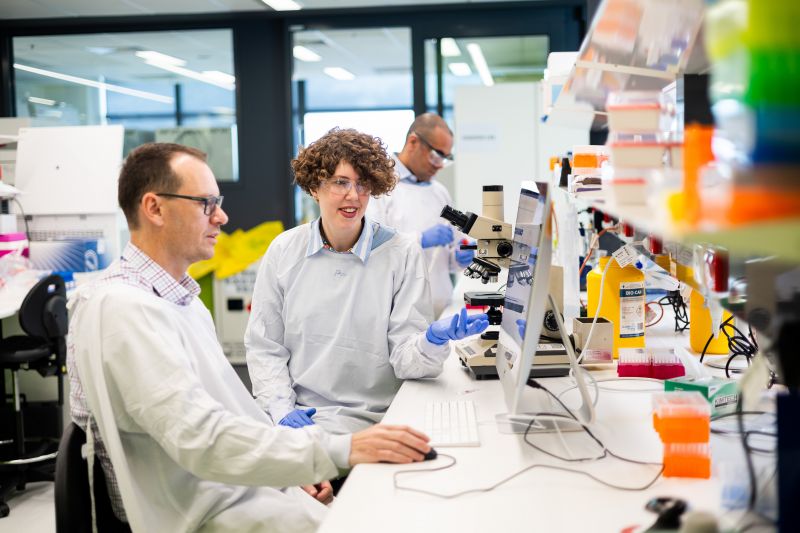
In partnership with the Peter MacCallum Cancer Centre’s NET Unit a European Neuroendocrine Tumour Society (ENETS) Centre of Excellence, the RADIO lab is working to develop better diagnostic tests and future treatment options for people with PNETs.
They are using genomics to discover the fundamental biology of NETs and understand response to treatments, including peptide receptor radionuclide therapy (PRRT) and radiosensitising DNA alkylating chemotherapy (e.g. temozolomide).
-
Standard biopsies are often unfeasible in NET patients due to tumour inaccessibility and the risk of dangerous hormone release. As part of a multi-site liquid biopsy study called SANGUIS led by Prof Michael Michael at the Peter Mac, the RADIO Lab is testing non-invasive liquid biopsy methods to detect circulating tumour DNA and NET related proteins in patient blood, benchmarking against conventional blood and imaging biomarkers. The aim is to develop non-invasive methods to enable better NET diagnosis, surveillance, personalised treatment allocation and detection of the emergence of treatment resistance.
-
The RADIO Lab is using advanced methods such as next-generation sequencing, single cell genomics and immune profiling of MCC to understand the genomic pathology of these cancers and the interaction between MCC cancer cells and the immune system. The lab has a particular interest in non-conventional T cells found in the tumour microenvironment called gamma delta T cells. The lab is collaborating with researchers at the Peter Doherty Institute to understand why some MCC tumours attract these non-conventional T cells and whether they can be harnessed for more effective treatment.
-
RADIO Lab is leading translational studies for two MRFF clinical trials – iMAT and GoTHAM administered by Melanoma and Skin Cancer Trials Ltd (MASC). iMAT (PI: Wen Xu, University of Queensland) involves the application of adjuvant immunotherapy in patients with Stage I-III disease while GoTHAM (PI: Shahneen Sandhu) is testing the combination of immunotherapy with radiation in late stage (stage IV) disease. Translational studies for these trials are using genomics and immune profiling to understand immunotherapy treatment response. Both trials also involve application of liquid biopsy as a prognostic and surveillance biomarker.
Latest News
Watch our seminars
Watch our seminars on-demand, highlighting our work across the Collaborative Centre for Genomic Cancer Medicine.
Contact and more information
Associate Professor Richard Tothill
Department of Clinical Pathology
rtothill@unimelb.edu.au