
Deciphering genomic codes to predict prostate cancer behaviour, informing better diagnostic tools and treatment models.
Prostate cancer is the most diagnosed cancer in Australia. An estimated one in six males will receive a diagnosis by the time they turn 85 – four times higher than the average global risk.
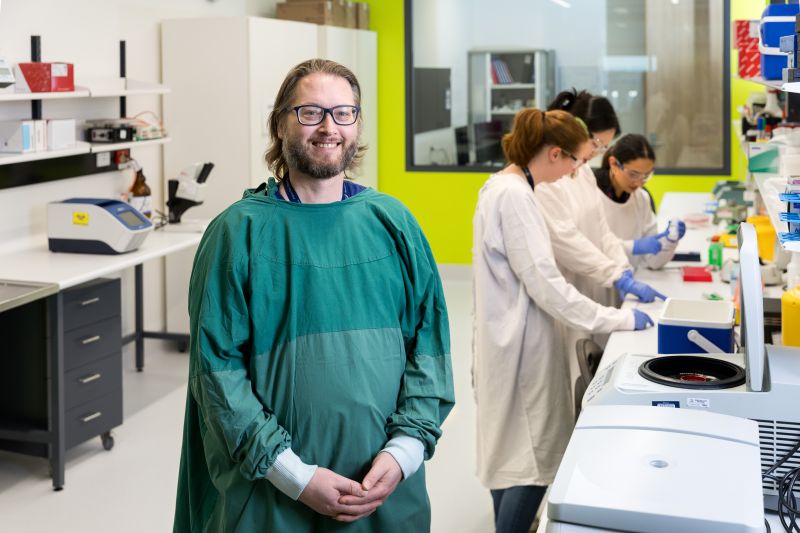
Led by Professor Niall Corcoran, the Prostate Cancer Reseach Group deciphers genomic codes that drive metastasis and lethal disease in prostate cancer.
Their team of researchers have unique expertise tracking, sampling, and interrogating lethal tumour specimens in living patients, using deep genomic analysis.
The group were first in the world to identify the precise patterns and direction of lethal prostate cancer spread, successfully determining tumour complexity at primary and metastatic sites.
Key aims

Discovery program
By linking genomic signatures to actual clinical outcomes, the Prostate Cancer Research group can help predict the course prostate cancer will take as it progresses. This information is crucial to determine how aggressive a cancer might be, aiding clinicians to offer a more accurate prognosis.
Research Projects
-
The group is a founding member of the Pan Prostate Cancer Group. This international consortium has created the largest tumour specific genome database to date, made up of whole genome and exome data from a diverse global group of more than 2,000 men with prostate cancer.
Once sequenced, genomes go through an analysis pipeline. Unlike any other large international tumour sequencing project, all enrolled patients receive long term, ongoing clinical follow-up. This allows tumour specific genetic variations to be matched with meaningful clinical outcomes and endpoints.
The group also lead a task force focused on advanced and metastatic disease in the consortium.
-
The PRostatE CancEr Prognosis and Treatment (PRECEPT) project was funded by the Prostate Cancer Research Alliance, a joint initiative between the Movember Foundation and the Australian Government, to improve care for localised prostate cancer patients.
Objectives include developing a tissue and blood test that will predict the future risk of progression in men with prostate cancer at the time of diagnosis. The project also aims to develop new ‘curative’ treatments in patients with high-risk disease, and tests that will predict how patients will respond to treatment.

GenI-AIRSPACE: Genomically Informed Active Surveillance in Intermediate Risk Prostate Cancer
In 2024 Professor Hovens and colleagues received funding from The Advanced Genomic Collaboration to lead a study using genomic testing and predictive disease modelling to guide therapy and reduce the burden of prostate cancer diagnosis, which evidence suggests is over-diagnosed and over-treated in early disease.
The hope is that by using genomic testing at the time of diagnosis to identify men with a lower risk of disease progression, the trial can help reduce the number of men receiving extensive treatment without compromising their long-term health outcomes.
Latest News
Contact and more information
Professor Chris Hovens
Department of Surgery, Melbourne Medical School
chovens@unimelb.edu.au
Professor Niall Corcoran
Department of Surgery, Melbourne Medical School
con@unimelb.edu.au