Understanding the evolution of cancer through development of molecular biomarkers for clinical application, including early detection, risk stratification and disease monitoring.
Biomarkers are genes, proteins, or other substances that reveal important details about a person’s cancer, including how it is progressing or responding to treatment. This information can help clinicians monitor disease and choose optimal care paths.
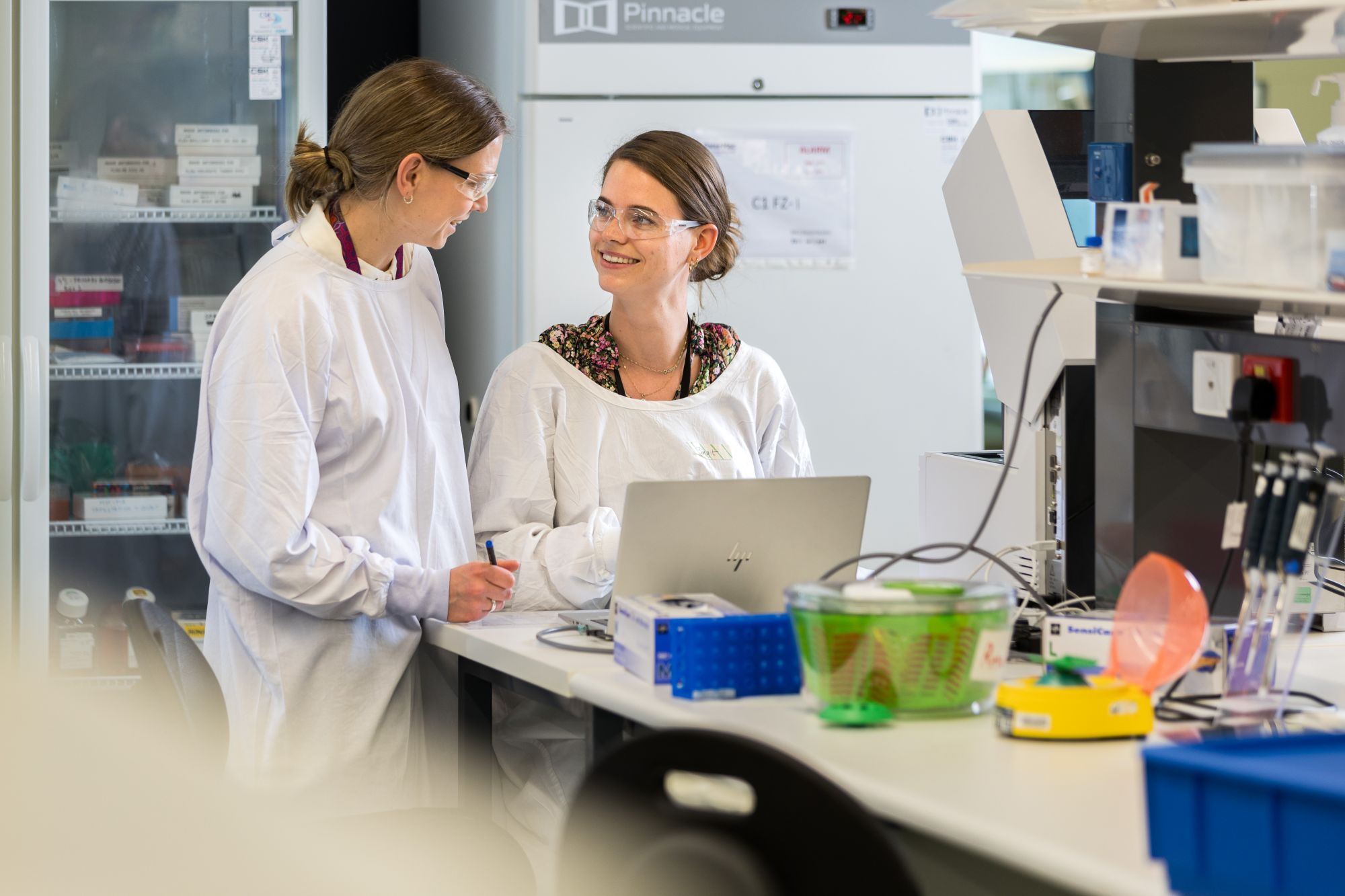
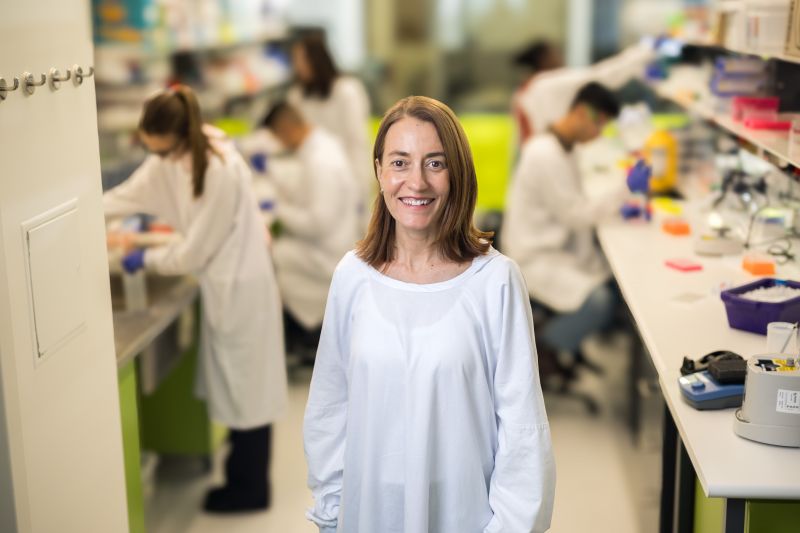
Professor Sarah-Jane Dawson's laboratory is developing improved molecular biomarkers to aid in early detection, risk stratification, and disease monitoring in cancer.
They are pioneering alternative ways to collect tumour information from a simple blood test by deciphering small amounts of cancer derived DNA in the bloodstream known as circulating tumour DNA (or ctDNA). This non-invasive procedure means patients who aren’t able to have tumour tissue collected can still access comprehensive genomic testing – allowing more people to benefit from precision cancer care.
This research team aims to provide evidence needed to support reimbursement of ctDNA based tests, ensuring genomics becomes more affordable and available for people impacted by cancer.

A new way to collect tumour information
Compared with tissue sampling, ‘liquid biopsies’ may be able to reduce time to diagnosis through earlier cancer detection, as well as allowing more accurate surveillance and monitoring of recurrence. They can also help identify early stages of developing drug resistance to cancer therapies.
Professor Dawson’s research group is working towards establishing the clinical utility of ctDNA testing through translational studies and prospective clinical trials, to facilitate the routine implementation of these approaches into clinical practice.
Research Projects
-
Characterising genomic and non-genomic evolution through serial tissue biopsies can be challenging due to the highly invasive nature of repeated sampling. In contrast, ctDNA can be easily obtained through minimally invasive blood sampling, repeated at regular intervals during treatment.
To date, ctDNA has primarily been used to characterise genomic evolution and has not been utilised to study non-genetic, adaptive mechanisms of the tumour transcriptome which are equally important to understand. Led by Dr Dineika Chandrananda, this research project is developing new tools to study transcriptional evolution through circulating tumour DNA analysis.
-
Most patients with early-stage breast cancer are cured with surgery and adjuvant therapies. However, some patients will develop disease recurrence over time. There are currently no surveillance strategies routinely employed in the clinic to monitor molecular minimal residual disease (MRD) following curative treatment for breast cancer.
Liquid biopsies provide a unique opportunity in this context through the analysis of ctDNA. This project, led by a team of researchers, aims to develop a sensitive and specific multimodality approach for ctDNA MRD detection in breast cancer to predict which patients are at highest risk of relapse.
-
The development of therapeutic resistance significantly limits the efficacy of many cancer treatments and represents a major problem faced in the care of cancer patients. Cancers either demonstrate de-novo resistance or develop acquired resistance to therapies through diverse processes of adaptation and selection.
Several projects led by Dr Ankit Dutta, Dr Julia Matas and Dr Birgit Wever are using ctDNA based approaches to monitor disease trajectories following novel therapies across a range of cancer types to further our understanding of the mechanisms of therapeutic response and resistance.
-
Diffuse large B-cell lymphoma is an aggressive and common blood cancer. A new and innovative form of cancer treatment called chimeric antigen receptor (CAR) T-cell therapy can be effective for patients with this disease, however, we cannot yet predict which patients will respond. Complex factors relating to the patient, immune system, tumour, and CAR T-cells may influence response to treatment, but the exact causes are unknown.
Led by Dr Clare Gould, this project aims to identify features that predict response to CAR T-cell therapy by studying blood and tissue samples from CAR T-cell recipients, using new and innovative genomic techniques.
-
Hepatocellular carcinoma (HCC) is a leading cause of cancer deaths both globally and in Australia. Diagnosis of HCC is challenging and usually based on strict radiological criteria using multimodal contrast-enhanced imaging. In contrast to other tumour types, very few HCCs are diagnosed by liver biopsy. There is a narrow time window between detection of a liver lesion fulfilling radiological diagnostic criteria for HCC, and growth to a size where curative therapy is no longer possible.
Led by Dr Lauren Andersson, this project is investigating the role of ctDNA as a minimally invasive biomarker in HCC to facilitate early detection and therapeutic monitoring in this disease.
-
Melanoma is the most aggressive type of skin cancer and the cause of most skin cancer deaths worldwide. Whilst most patients with early-stage melanoma can be cured, some will go on to develop metastatic disease. Currently there are no biomarkers to predict which patients are at highest risk of relapse to determine who will be cured by surgery alone versus those requiring additional monitoring or therapy. This gap in knowledge provides a unique opportunity for the development of novel ctDNA based strategies for predictive modelling in this disease. This research project is being led by Ann Onuselogu.
Latest News
Contact and more information
Professor Sarah-Jane Dawson
The Sir Peter MacCallum Department of Oncology
sarah-jane.dawson@petermac.org