
Using personalised cancer genomics to decode the underlying drivers and therapeutic vulnerabilities of challenging cancers, developing new tools for diagnosis and surveillance.
Cancer treatment is undergoing a transformation. Patient care plans are becoming highly personalised, underpinned by genomics.
Led by Professor Sean Grimmond, the Clinical Cancer Genomics group is harnessing genomics to improve cancer detection and diagnosis, optimise therapeutic intervention, and monitor changes in cancer burden and therapeutic response. These investigations are driving a deeper understanding of resistance to treatment, and identifying new targets and biomarkers needed to tackle cancers of unmet need.
The Clinical Cancer Genomics group undertakes real-time genomic sequencing for patients with some of the rarest and most challenging types of cancer, such as pancreatic cancer. These cases present a clinical conundrum often beyond the standard of care. They can be difficult to diagnose or trace back to tissue of origin, resistant to treatment, and prone to relapse.
The group take advantage of rapid advances in in machine learning, nanotechnology and big data, making it possible to decode the genome of cancer patients in a clinically useful timeframe.
Research Projects
-
Challenging cancer cases require rapid, robust genome analysis to provide accurate diagnoses, select optimal care paths and stratify patients for clinical trials. The Precision Oncology group is developing systems for routine cancer patient whole genome and transcriptome analysis, extracting clinically relevant information to improve clinical decision making and therapeutic selection, reporting to molecular tumour boards and research partners.
This platform underpins several of the Precinct’s large scale precision oncology initiatives such as the Brain Cancer PeriOperative Program (BPOP) and Cancer of Low survival and UnMet Need (COLUMN) initiatives.
-
Knowing the cell-type from which a cancer is derived is the cornerstone of modern cancer treatment. In approximately 5 per cent of cases, this cannot be fully resolved by traditional pathology. This uncertainty hampers selecting optimal care paths and can prevent equitable drug access.
The Molecular Second Opinions program is developing strategies to solve the diagnoses on enigmatic cases through collaborative studies like the COLUMN-Pathologist Initiated Program, SUPER-NEXT and FAPI-CUP studies, and the CUP-ID study based in South Australia.
-
While traditional cancer pathology tests rely on tumour tissue, it is not always readily available and is prone to failure in some tissues. The Clinical Cancer Genomics group is developing blood-based cancer diagnostic tools for when tissue biopsying is considered impractical, unsafe, and/or futile. They are also studying how ctDNA profiling can be combined with tissue testing to monitor changes in tumour burden. Projects include MESOGENOME and the OCEANIC trial.
-
Professor Grimmond’s group has a long history of systematically surveying the genomes of cancer cohorts to discover the underlying genetic events driving cancer formation and progression. These deep genomic discovery efforts continue in pancreatic cancer and mesothelioma. A better understanding of these driver mechanisms is needed to discover new approaches to combat challenging cancer-types like mesothelioma, pancreatic and rare neuroendocrine cancers.
-
Single cell and spatial genomics are exciting frontiers in cancer discovery and cancer pathology. This project seeks to take large cancer cohorts, use whole genome sequencing, single cell expression and spatial profiling to study tumour-immune-stromal cell ecosystems and how they are influenced by specific driver mutations. This collaborative work currently focuses on both pancreatic cancer (APGI & PURPLE registries) and breast cancer cohorts (Garvan).

TAGC Clinical Genomics Platform
Professor Sean Grimmond and team also lead the Clinical Genomics Platform, made possible through a partnership between Illumina and the University of Melbourne called The Advanced Genomics Collaboration (TAGC).
This infrastructure aims to integrate genomics into routine clinical care. They provide clinicians and their patients with rapid diagnostics from a biopsy or simple blood test, creating a gateway to better cancer care and targeted clinical trials.
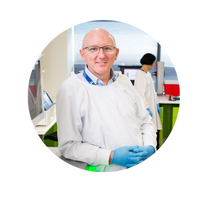
We're sequencing genomes for patients with some of the rarest and most challenging types of cancer. Professor Sean Grimmond
Latest News
Watch our seminars
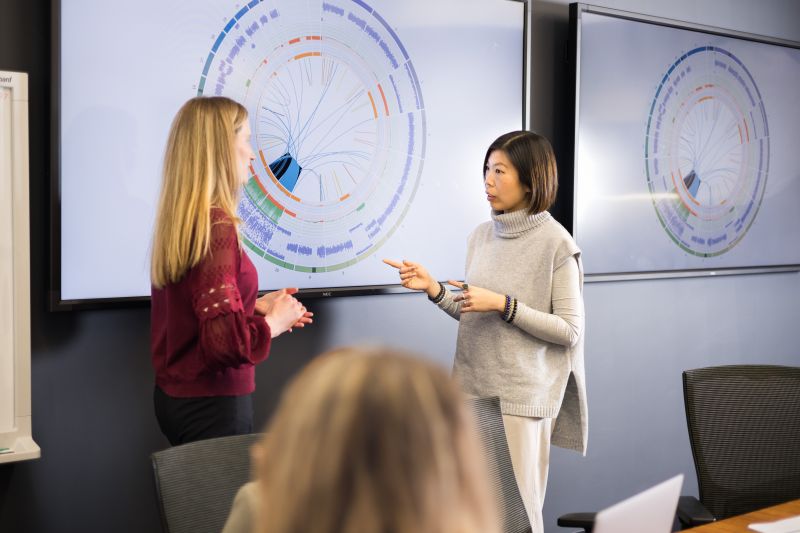
Watch our seminars on-demand, highlighting our work across the Collaborative Centre for Genomic Cancer Medicine.
Contact and more information
Professor Sean Grimmond
Collaborative Centre for Cancer Research
ccgcm-team@unimelb.edu.au
+61 3 8559 6142