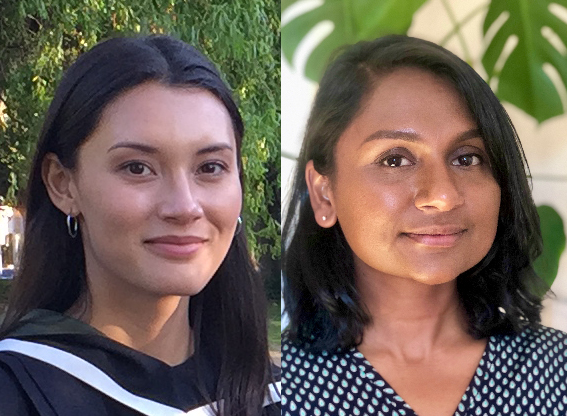
SEMINAR | Robin Wagner & Bishma Jayathilaka
Share via
Development of a 3D Platform to Investigate NK Cell Regulation in Metastatic Colorectal Cancer
ROBIN WAGNER
Master of Biomedical Sciences student
Tumour Heterogeneity in Metastatic Cancer lab, UMCCR & Department of Clinical Pathology
Immunotherapy has emerged as a promising tool for the treatment of solid cancer, but existing T cell-directed therapies benefit only a minority of patients with colorectal cancer. NK cells are an innate lymphocyte that play key cytotoxic and immune regulatory roles in the response to metastasis and may therefore be exploited for therapeutic benefit. However, NK cell surveillance is clearly insufficient, necessitating therapeutic strategies that reinstate NK cell anti-tumour immunity. Here we describe the development of a 3-dimensional in vitro co-culture assay combining patient-derived tumour organoids and NK cells that enables investigation of molecular pathways determinants of NK cell regulation in colorectal liver metastases.
Robin Wagner is a Master of Biomedical Sciences student in the Hollande Laboratory. She completed her Bachelor of Science at the University of Melbourne in 2019 with a major in Physiology.
Immune-related adverse events and the role of emerging risk factors
BISHMA JAYATHILAKA
Pharmacist
Peter Mac and Cancer Health Services Research group, UMCCR
Immune checkpoint inhibitors (ICI) have profoundly changed the treatment of cancer, in particular metastatic melanoma. Immune-related adverse events (irAE) continue to be a treatment-limiting barrier to the use of ICI. ICI work by blocking inhibitory immune pathways to promote T cell activity against tumour cells. As a result of reactivated cellular immunity, auto-immune toxicities can occur in various organ systems, including skin, gastrointestinal, endocrine, liver, lung and kidneys. Clinical, laboratory and patient characteristics that may increase irAE incidence and severity are emergingly reported in literature on ICI treatment in diverse cancer types.
This session will cover principles of T cell mediated immune responses, immune checkpoint pathways, mechanism of clinical effect and toxicity of immune checkpoint inhibitors, and the future direction of emerging risk factors that may play a role in identifying patients who are at risk of irAE.
Bishma Jayathilaka is a clinical pharmacist and Chief Pharmacy Information Officer at Peter MacCallum Cancer Centre. After completing a Bachelor of Pharmacy in New Zealand, she completed a Master of Public Health at the University of Melbourne and an internship at the WHO Headquarters in the Department of Health Innovation. Through her clinical work, Bishma has maintained an interest in cancer and has worked in paediatric and adult cancer in regional and metropolitan health services.
Bishma commenced a PhD in July 2021 under the joint supervision of Professor Maarten IJzerman, Dr George Au-Yeung, and Dr Fanny Franchini. Her research focuses on risk prediction of immune-related adverse events (irAE) and aims to identify irAE occurrence in real-world data. Ultimately, her research aims to inform the development and integration of irAE risk prediction into clinical cancer services.